
In the realm of Human Resources, effective communication is paramount. Adjectives, in particular, play a crucial role in accurately describing employee attributes, job requirements, and organizational culture. This guide delves into the world of adjectives specifically tailored for HR contexts, providing you with the knowledge and tools to enhance your professional vocabulary and communication skills. Understanding these adjectives will enable you to write more compelling job descriptions, conduct more insightful performance reviews, and foster a more positive and productive work environment. Whether you’re an HR professional, a hiring manager, or simply someone looking to improve their workplace communication, this article will provide valuable insights and practical examples.
Table of Contents
- Definition of Adjectives for HR
- Structural Breakdown of HR Adjectives
- Types of Adjectives Used in HR
- Examples of Adjectives in HR Contexts
- Usage Rules for HR Adjectives
- Common Mistakes When Using HR Adjectives
- Practice Exercises
- Advanced Topics in HR Adjectives
- Frequently Asked Questions
- Conclusion
Definition of Adjectives for HR
Adjectives are words that modify nouns or pronouns, providing descriptive details. In the context of Human Resources, adjectives are used to describe a wide range of elements, including employee characteristics (motivated, reliable), job requirements (demanding, technical), organizational culture (collaborative, innovative), and performance metrics (efficient, accurate). These adjectives help paint a clearer picture, enabling more effective communication and decision-making within the HR function. They are essential for creating precise job descriptions, providing constructive feedback, and fostering a shared understanding of expectations and values.
The primary function of adjectives in HR is to provide specific details. These details help to differentiate between candidates, clarify job expectations, and assess employee performance. Without descriptive adjectives, communication can become vague and open to interpretation, leading to misunderstandings and inefficiencies. The classification of HR adjectives can be based on their meaning; for example, adjectives describing personality traits, skills, or work ethic. The context in which an adjective is used significantly impacts its interpretation. “Aggressive,” for instance, can be positive in a sales context (aggressive sales tactics) but negative when describing interpersonal behavior (aggressive communication style). Therefore, careful selection and contextual awareness are crucial when using adjectives in HR.
Structural Breakdown of HR Adjectives
Adjectives in HR, like all adjectives, can be analyzed based on their structure and how they modify nouns. They typically precede the noun they modify (a dedicated employee) but can also follow a linking verb (The employee is dedicated). Understanding the structural rules allows for more precise and effective writing. Furthermore, many adjectives can be modified by adverbs to add another layer of description (a highly motivated candidate). The degree of the adjective can also be expressed through comparative and superlative forms (more efficient, most reliable). This structural flexibility allows for nuanced and detailed descriptions.
The structure of adjective phrases often includes determiners (a, an, the), adverbs (very, extremely), and the adjective itself. For example, “a highly skilled professional” includes the determiner “a,” the adverb “highly,” and the adjective “skilled.” The structural order is typically determiner + adverb + adjective + noun. Understanding this structure is crucial for constructing grammatically correct and meaningful sentences. Adjectives can also be part of compound adjectives, which are two or more words that function as a single adjective (customer-focused approach). These compound adjectives often require hyphens to ensure clarity.
Types of Adjectives Used in HR
Adjectives used in HR can be categorized based on the aspect they describe. Here are some common types:
Describing Employee Characteristics
These adjectives describe personality traits, skills, and work ethic. Examples include diligent, adaptable, communicative, analytical, and proactive. These are crucial for performance reviews and candidate assessments.
Describing Job Requirements
These adjectives define the skills, experience, and qualities needed for a specific role. Examples include technical, leadership, fast-paced, detail-oriented, and customer-facing. These are vital for crafting effective job descriptions.
Describing Organizational Culture
These adjectives reflect the values, beliefs, and practices of the company. Examples include inclusive, innovative, collaborative, results-driven, and supportive. These are important for attracting and retaining employees who align with the company’s mission.
Describing Performance Metrics
These adjectives quantify or qualify employee output and achievements. Examples include efficient, accurate, productive, consistent, and improved. These are essential for performance evaluations and identifying areas for development.
Describing Training and Development
These adjectives describe the nature and impact of training programs. Examples include comprehensive, interactive, skill-enhancing, relevant, and effective. These are crucial for assessing the value of training initiatives.
Examples of Adjectives in HR Contexts
To further illustrate the use of adjectives in HR, here are several examples organized by category. Each table provides a range of adjectives and their application in different HR scenarios.
Table 1: Adjectives Describing Employee Characteristics
This table showcases adjectives frequently used to describe various aspects of employee attributes, which are valuable during performance reviews and recruitment processes.
| Adjective | Example Usage |
|---|---|
| Adaptable | The candidate demonstrated an adaptable approach to problem-solving. |
| Ambitious | She is an ambitious employee who consistently seeks new challenges. |
| Analytical | His analytical skills are essential for data-driven decision-making. |
| Collaborative | The team benefits from her collaborative spirit and willingness to help others. |
| Communicative | A communicative team member is crucial for effective project management. |
| Creative | The company values creative solutions and innovative thinking. |
| Dedicated | He is a dedicated employee who consistently goes the extra mile. |
| Diligent | Her diligent work ethic ensures accuracy and attention to detail. |
| Disciplined | A disciplined approach is necessary for meeting deadlines and achieving goals. |
| Efficient | The new system has made the process more efficient and streamlined. |
| Empathetic | An empathetic leader fosters a positive and supportive work environment. |
| Flexible | We need flexible employees who can adapt to changing priorities. |
| Innovative | The company encourages innovative ideas and creative solutions. |
| Motivated | A motivated workforce is essential for achieving organizational success. |
| Organized | Her organized approach ensures efficient workflow and project management. |
| Patient | A patient mentor is key to guiding new employees through their onboarding process. |
| Persistent | His persistent efforts led to the successful completion of the project. |
| Proactive | A proactive approach is crucial for anticipating and addressing potential problems. |
| Reliable | She is a reliable employee who can always be counted on to deliver. |
| Resourceful | His resourceful nature allows him to find creative solutions to complex problems. |
| Strategic | A strategic thinker is essential for long-term planning and decision-making. |
| Team-oriented | The company values team-oriented individuals who prioritize collaboration. |
| Thoughtful | Her thoughtful consideration of different perspectives leads to better decisions. |
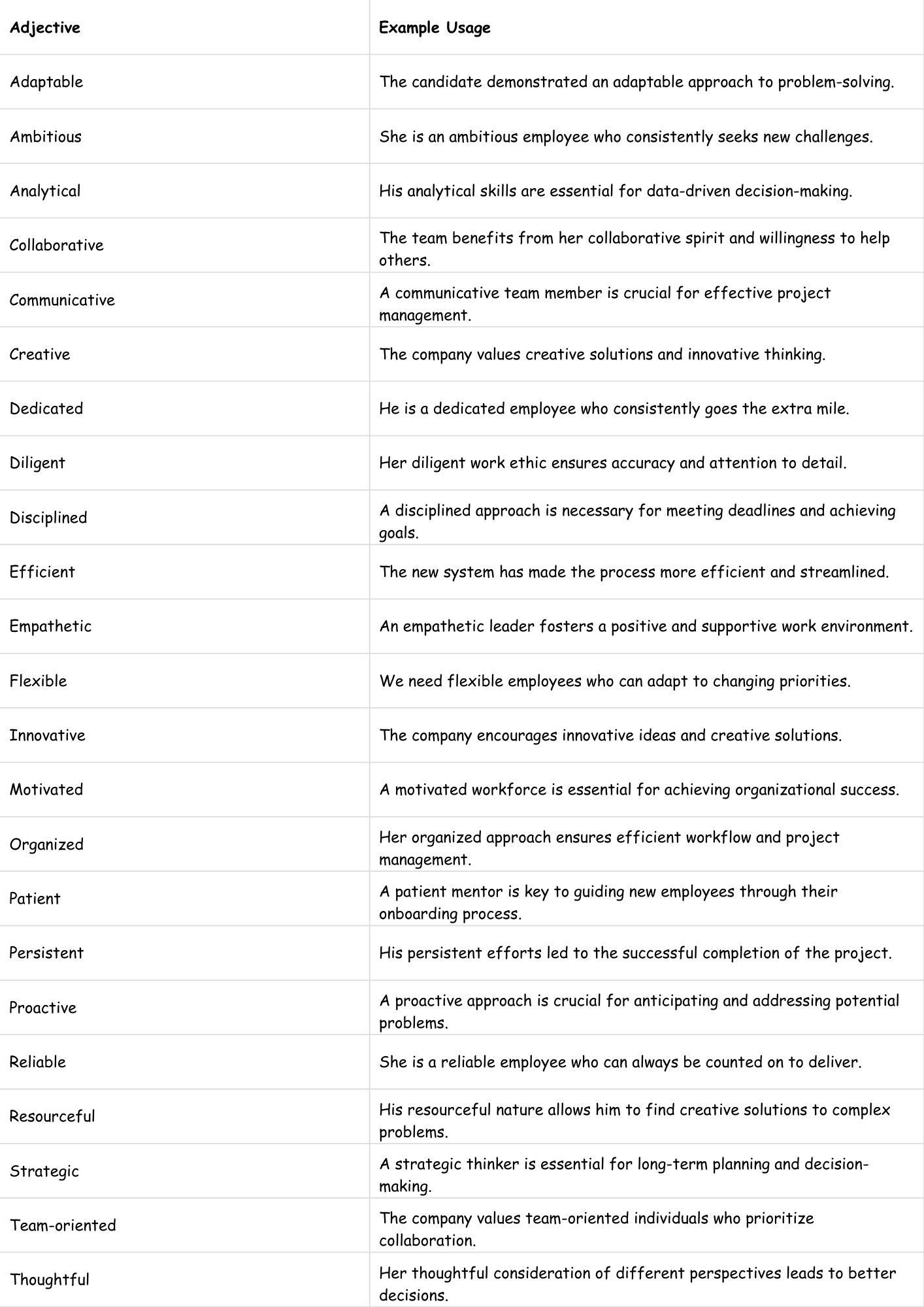
Table 2: Adjectives Describing Job Requirements
This table provides adjectives vital for crafting clear and concise job descriptions, accurately reflecting the necessary skills and experience.
| Adjective | Example Usage |
|---|---|
| Technical | The position requires technical expertise in software development. |
| Leadership | We are seeking a candidate with strong leadership skills. |
| Fast-paced | The work environment is fast-paced and requires quick decision-making. |
| Detail-oriented | The role requires a detail-oriented individual with a focus on accuracy. |
| Customer-facing | This is a customer-facing role requiring excellent communication skills. |
| Demanding | The job is demanding and requires a high level of commitment. |
| Challenging | The project presents a challenging opportunity for professional growth. |
| Entry-level | This is an entry-level position suitable for recent graduates. |
| Senior-level | We are looking for a senior-level executive with extensive experience. |
| Full-time | This is a full-time position with comprehensive benefits. |
| Part-time | We offer part-time opportunities for students and working professionals. |
| Remote | This is a remote position allowing you to work from home. |
| On-site | This is an on-site position requiring you to work at the office. |
| Contractual | This is a contractual position with a defined term of employment. |
| Permanent | This is a permanent position with long-term career prospects. |
| Specialized | The role requires specialized knowledge in a specific field. |
| Advanced | Applicants should possess advanced skills in data analysis. |
| Innovative | We are looking for candidates who can bring innovative solutions to complex problems. |
| Strategic | The role requires strategic thinking and long-term planning abilities. |
| Hands-on | This is a hands-on role, so get ready to get your hands dirty. |
| Cross-functional | Experience working in cross-functional teams is a plus. |
| Results-oriented | We need a results-oriented candidate who can consistently meet targets. |
| Independent | This role requires an independent worker who is self-motivated. |
Table 3: Adjectives Describing Organizational Culture
This table illustrates adjectives used to describe the values and environment of a company, which are crucial for attracting candidates who align with the organization’s mission.
| Adjective | Example Usage |
|---|---|
| Inclusive | The company fosters an inclusive environment where everyone feels valued. |
| Innovative | We promote an innovative culture that encourages creativity and experimentation. |
| Collaborative | Our collaborative work environment encourages teamwork and open communication. |
| Results-driven | We have a results-driven culture focused on achieving measurable outcomes. |
| Supportive | The company provides a supportive work environment for employee growth. |
| Dynamic | We operate in a dynamic industry that requires adaptability and innovation. |
| Fast-paced | The company has a fast-paced culture that rewards efficiency and productivity. |
| Open | We maintain an open culture that encourages transparency and feedback. |
| Ethical | The company is committed to an ethical and responsible business practices. |
| Progressive | We have a progressive culture that embraces change and innovation. |
| Customer-centric | Our customer-centric culture prioritizes customer satisfaction and loyalty. |
| Employee-focused | We have a employee-focused culture that values employee well-being and development. |
| Global | We operate in a global environment with diverse teams and international opportunities. |
| Agile | We have an agile work environment that adapts quickly to changing market conditions. |
| Sustainable | The company is committed to sustainable practices and environmental responsibility. |
| Transparent | We foster a transparent and open communication environment. |
| Learning-oriented | The company has a learning-oriented culture that values continuous improvement. |
| Merit-based | We have a merit-based system that rewards performance and contributions. |
| Family-friendly | We offer a family-friendly environment with flexible work arrangements. |
| Team-based | We promote a team-based approach as opposed to an individualistic one. |
| Value-driven | Our culture is value-driven and we promote our core values daily. |
| Growth-oriented | We are a growth-oriented organization and we encourage our employees to grow with us. |
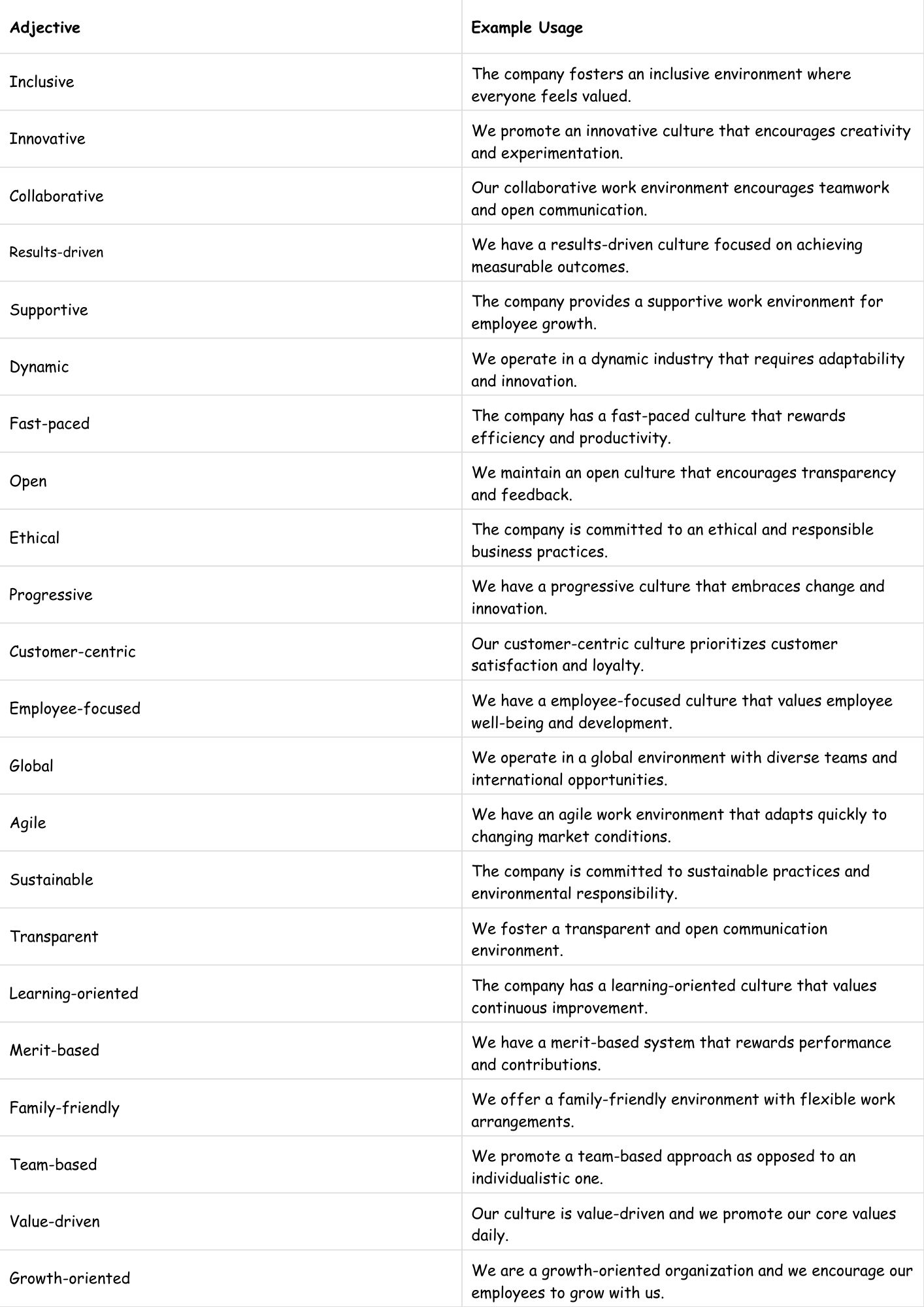
Table 4: Adjectives Describing Performance Metrics
This table highlights adjectives used to evaluate employee performance, which are essential for performance evaluations and identifying areas for development.
| Adjective | Example Usage |
|---|---|
| Efficient | Her work is highly efficient, completing tasks in a timely manner. |
| Accurate | His reports are consistently accurate and free of errors. |
| Productive | She is a productive member of the team, consistently exceeding expectations. |
| Consistent | His performance is consistent and reliable over time. |
| Improved | Her performance has improved significantly since the last review. |
| Exceptional | His performance is exceptional and deserves recognition. |
| Satisfactory | Her performance is satisfactory and meets the required standards. |
| Unsatisfactory | His performance is unsatisfactory and requires improvement. |
| Outstanding | Her contribution to the project was outstanding and invaluable. |
| Marginal | His performance is marginal and needs immediate attention. |
| Measurable | We set measurable goals to track progress and assess performance. |
| Quantifiable | We use quantifiable metrics to evaluate employee output. |
| Timely | Her responses are always timely and prompt. |
| Effective | His communication skills are effective in resolving conflicts and building relationships. |
| Strategic | His strategic planning has led to significant improvements in team efficiency. |
| Data-driven | We make data-driven decisions based on performance metrics and analytics. |
| Sustainable | We aim for sustainable performance improvements that last over time. |
| Innovative | His innovative solutions have significantly improved process efficiency. |
| Consistent | Her work is consistent, no matter the task at hand. |
| Precise | He is precise in his work, and takes great care to avoid mistakes. |
Table 5: Adjectives Describing Training and Development
This table illustrates adjectives used to describe the nature and impact of training programs, crucial for assessing the value and effectiveness of training initiatives.
| Adjective | Example Usage |
|---|---|
| Comprehensive | The training program provides a comprehensive overview of the company’s products. |
| Interactive | The workshop includes interactive sessions to engage participants. |
| Skill-enhancing | The course is designed to be skill-enhancing, providing the participants with new abilities. |
| Relevant | The training content is relevant to the employee’s current role. |
| Effective | The training program has been effective in improving employee performance. |
| Engaging | The speaker was very engaging and kept the audience captivated. |
| Practical | The training provides practical tips and techniques that can be applied immediately. |
| Advanced | The seminar covers advanced topics in data analytics. |
| Introductory | The workshop is an introductory course for beginners. |
| Mandatory | This training is mandatory for all new employees. |
| Optional | This course is optional and open to all employees. |
| Online | The training is delivered via an online platform. |
| In-person | The workshop is an in-person event held at the company headquarters. |
| Customized | The training program is customized to the specific needs of the team. |
| Ongoing | The company provides ongoing training and development opportunities. |
| Continuous | We believe in continuous professional development and learning. |
| Targeted | We provide targeted training to address specific skill gaps. |
| Developmental | The program is developmental and aimed at building future leaders. |
| Transformative | The training was transformative and changed the way I think about the problem. |
| Interactive | The training program involved interactive elements to improve knowledge retention. |
Usage Rules for HR Adjectives
Using adjectives correctly is crucial for clear and professional communication. Here are some key usage rules to keep in mind when using adjectives in HR contexts.
- Placement: Adjectives typically precede the noun they modify (a motivated employee). However, they can also follow a linking verb (The employee is motivated).
- Adjective Order: When using multiple adjectives, follow a general order: opinion, size, age, shape, color, origin, material, purpose (e.g., a beautiful, large, old, wooden desk). This is less relevant in HR-specific language, but important to keep in mind.
- Comparative and Superlative Forms: Use comparative forms (-er or more) to compare two things (more efficient) and superlative forms (-est or most) to compare three or more things (most reliable).
- Hyphenated Adjectives: Use hyphens for compound adjectives that come before a noun (a customer-focused approach). However, do not hyphenate them when they follow a linking verb (The approach is customer focused).
- Contextual Appropriateness: Choose adjectives that are appropriate for the specific context. Consider the potential impact of your words and avoid using language that could be perceived as biased or discriminatory.
- Avoid Overuse: While adjectives are important, avoid using too many in a single sentence. Overuse can make your writing sound cluttered and less impactful.
Common Mistakes When Using HR Adjectives
Even experienced writers can make mistakes when using adjectives. Here are some common errors to avoid in HR writing.
| Incorrect | Correct | Explanation |
|---|---|---|
| “The employee is very motivate.” | “The employee is very motivated.” | Using the correct form of the adjective. |
| “A good employee.” | “A reliable employee.” | Using a more specific and descriptive adjective. |
| “The job is very demanding, very challenging, and very important.” | “The job is demanding, challenging, and important.” | Avoiding overuse of adverbs. |
| “A customer focused approach.” | “A customer-focused approach.” | Using a hyphen for compound adjectives before a noun. |
| “He is the most efficientest employee.” | “He is the most efficient employee.” | Avoiding double superlatives. |
| “She is an aggressively employee.” | “She is an aggressive employee.” | Using the correct part of speech. |
| “The training was really good.” | “The training was really effective.” | Using a more HR-specific adjective. |
Practice Exercises
Test your understanding with these practice exercises. Choose the best adjective to complete each sentence.
Exercise 1
| Question | Answer |
|---|---|
| 1. We are looking for a ________ candidate with strong leadership skills. (leader / leadership / leading) | leadership |
| 2. The company values ________ employees who are committed to excellence. (dedicate / dedicated / dedicating) | dedicated |
| 3. His ________ skills are essential for analyzing complex data. (analytically / analytical / analyze) | analytical |
| 4. The job requires a ________ individual with attention to detail. (detail / detailed / detailing) | detail-oriented |
| 5. We offer a ________ work environment where employees can thrive. (support / supportive / supporting) | supportive |
| 6. The training program provides a ________ overview of the company’s policies. (comprehend / comprehensive / comprehending) | comprehensive |
| 7. She is a ________ member of the team, consistently exceeding expectations. (productively / productive / produce) | productive |
| 8. The company is committed to ________ business practices. (ethic / ethical / ethically) | ethical |
| 9. We need ________ employees who can adapt to changing priorities. (flexible / flexibility / flexibly) | flexible |
| 10. His ________ thinking has led to significant improvements in team efficiency. (strategic / strategy / strategically) | strategic |
Exercise 2
Rewrite the following sentences using more descriptive adjectives.
| Question | Answer |
|---|---|
| 1. He is a good employee. | He is a reliable and dedicated employee. |
| 2. The job is hard. | The job is demanding and challenging. |
| 3. The company has a nice culture. | The company has a collaborative and inclusive culture. |
| 4. Her performance is okay. | Her performance is satisfactory and consistent. |
| 5. The training was helpful. | The training was effective and skill-enhancing. |
| 6. It’s a good opportunity. | It’s a valuable and challenging opportunity. |
| 7. He’s a smart worker. | He’s an efficient and analytical worker. |
| 8. This is a good program. | This is a comprehensive and innovative program. |
| 9. She has good communication skills. | She has excellent and persuasive communication skills. |
| 10. It was a good meeting. | It was a productive and informative meeting. |
Advanced Topics in HR Adjectives
For advanced learners, consider these more complex aspects of using adjectives in HR.
Adjective Collocations
Certain adjectives naturally pair with specific nouns. For example, “strong leadership” is a common collocation. Recognizing and using these collocations can enhance the fluency and naturalness of your writing.
Figurative Language
Adjectives can be used figuratively to create more vivid and engaging descriptions. For example, “a cutthroat competitive environment” uses the adjective “cutthroat” metaphorically to describe the intensity of the competition.
Avoiding Bias
Be mindful of the potential for bias in your adjective choices. Avoid using adjectives that could perpetuate stereotypes or discriminate against certain groups. For example, instead of “aggressive,” consider “assertive,” which has a more neutral connotation.
Thesaurus Usage
Use a thesaurus to expand your vocabulary and find more precise adjectives. However, be careful to choose synonyms that are appropriate for the specific context and do not alter the intended meaning.
Frequently Asked Questions
Here are some frequently asked questions about using adjectives in HR contexts.
- What are some examples of adjectives to describe a positive work environment?Examples include supportive, inclusive, collaborative, innovative, dynamic, ethical, and transparent. These adjectives convey a sense of positivity, growth, and mutual respect within the workplace.
- How can I use adjectives to write a more effective job description?Use adjectives to clearly define the required skills, experience, and qualities for the role. Examples include technical, leadership, detail-oriented, customer-facing, and fast-paced. This will help attract candidates who are a good fit for the position.
- What are some adjectives to avoid when describing employee performance?Avoid adjectives that are vague, subjective, or potentially biased. Examples include good, bad, average, and lazy. Instead, use more specific and objective adjectives like efficient, accurate, consistent, and improved.
- How can I use adjectives to provide constructive feedback to employees?Use adjectives to describe specific behaviors and outcomes, rather than making general judgments about the employee’s character. For example, instead of saying “You are disorganized,” say “Your work is often disorganized, leading to missed deadlines.”
- What is the best way to learn more HR-related adjectives?Read job descriptions, performance reviews, and HR articles to familiarize yourself with the specific language used in the field. Pay attention to how adjectives are used to describe different aspects of HR and make a note of new words and phrases. Consider creating a personal glossary of HR adjectives to refer to when writing.
- How do I avoid using biased language when choosing adjectives in HR?Be mindful of the potential impact of your words and avoid using adjectives that could perpetuate stereotypes or discriminate against certain groups. Consider the connotations of the adjectives you choose and opt for more neutral alternatives. Seek feedback from others to identify any potential biases in your language.
- Can I use too many adjectives in HR writing?Yes, overuse of adjectives can make your writing sound cluttered and less impactful. Strive for balance and choose adjectives that add significant value to your descriptions. Focus on quality over quantity and prioritize clarity and conciseness.
- What role do adjectives play in shaping company culture narratives?Adjectives are crucial in crafting the narrative around your company culture. Words like ‘innovative,’ ‘collaborative,’ ‘inclusive,’ and ‘ethical’ set the tone and communicate what the company values and encourages. This helps attract like-minded individuals and reinforces the desired culture internally.
Conclusion
Mastering the use of adjectives in HR is essential for effective communication and professional success. By understanding the different types of adjectives, their usage rules, and common mistakes to avoid, you can enhance your writing skills and improve your ability to describe employees, job requirements, and organizational culture with accuracy and precision. Remember to choose your words carefully, be mindful of context, and strive for clarity and objectivity in your communication. With practice and attention to detail, you can become a more confident and effective communicator in the field of Human Resources.
Continue to expand your vocabulary by reading HR-related materials, using a thesaurus to find synonyms, and seeking feedback from colleagues. Pay attention to the specific language used in your organization and industry, and adapt your writing accordingly. By continuously improving your understanding and application of adjectives, you can elevate your communication skills and contribute to a more positive and productive work environment.